
Latest Coverage

News & Stories

Signals, chapters-in-action, and on-the-ground reports curated for the BOCEA community.

Ingestion Monitor

Feeds updated 2 hours ago

Tracking the past 6h window across 1 categories.

Data is flagged stale after 45 minutes without new fetches.

Needs Refresh Run php artisan news:ingest to catch up.

National

10

Last 2 hours ago

Engineer proves that Kohler’s smart toilet cameras aren’t very private
Ars Technica Science

Engineer proves that Kohler’s smart toilet cameras aren’t very private

Kohler is facing backlash after an engineer pointed out that the company’s new smart toilet cameras may not be as private as it wants people to believe. Th

e discussion raises questions about Kohler’s use of the term “end-to-end encryption” (E2EE) and the inherent privacy limitations of a device that films the goings-on of a toilet bowl. In Octob

er, Kohler announced its first “health” product, the Dekoda. Kohler’s ann

ouncement described the $599 device (it also requires a subscription that starts at $7 per month) as a toilet bowl attachment that uses “optical sensors and validated machine-learning algorithms” to deliver “valuable insights into your health and wellness.” The announcement added

: Data flows to the pers

onalized Kohler Health app, giving users continuous, private awareness of key health and wellness indicators—right on their phone. Features like fingerprin

t authentication and end-to-end encryption are designed for user privacy and security. The average person is mo

st likely to be familiar with E2EE through messaging apps, like Signal. Messages sent via apps w

ith E2EE are encrypted throughout transmission. Only the message’s sende

r and recipient can view the decrypted messages, which is intended to prevent third parties, including the app developer, from reading them. But how does E2EE apply to


CDC vaccine panel realizes again it has no idea what it’s doing, delays big vote
Ars Technica Science

CDC vaccine panel realizes again it has no idea what it’s doing, delays big vote

Today’s meeting was chaotic and included garbage anti-vaccine presentations. Th

e panel of federal vaccine advisors hand-selected by anti-vaccine Health Secretary Robert F. Ke

nnedy Jr. has once again punted on whether to strip recommendations for hepatitis B vaccinations for newborns—a move it tried to make in September before realizing it didn’t know what it was doing. The de

cision to delay the vote today came abruptly this afternoon when the panel realized it still does not understand the topic or what it was voting on. Prior

to today’s 6–3 vote to delay a decision, there was a swirl of confusion over the wording of what a new recommendation would be. Panel memb

ers had gotten three different versions of the proposed recommendation in the 72 hours prior to the meeting, one panelist said. And the me

eting’s data presentations this morning offered no clarity on the subject—they were delivered entirely by anti-vaccine activists who have no subject matter expertise and who made a dizzying amount of false and absurd claims. Overall, the m

eeting was disorganized and farcical. Kennedy’s pane

l has abandoned the evidence-based framework for setting vaccine policy in favor of airing unvetted presentations with misrepresentations, conspiracy theories, and cherry-picked studies. At times, there

were tense exchanges, chaos, confusion, and misunderstandings. Still, the discu

Researchers find what makes AI chatbots politically persuasive
Ars Technica Science

Researchers find what makes AI chatbots politically persuasive

A massive study of political persuasion shows AIs have, at best, a weak effect.

Roughly two years ago, Sam Altman tweeted that AI systems would be capable of superhuman persuasion well before achieving general intelligence—a prediction that raised concerns about the influence AI could have over democratic elections. To

see if conversational large language models can really sway political views of the public, scientists at the UK AI Security Institute, MIT, Stanford, Carnegie Mellon, and many other institutions performed by far the largest study on AI persuasiveness to date, involving nearly 80,000 participants in the UK. It

turned out political AI chatbots fell far short of superhuman persuasiveness, but the study raises some more nuanced issues about our interactions with AI. Th

e public debate about the impact AI has on politics has largely revolved around notions drawn from dystopian sci-fi. La

rge language models have access to essentially every fact and story ever published about any issue or candidate. Th

ey have processed information from books on psychology, negotiations, and human manipulation. Th

ey can rely on absurdly high computing power in huge data centers worldwide. On

top of that, they can often access tons of personal information about individual users thanks to hundreds upon hundreds of online interactions at their disposal. Ta

lking to a powerful AI system is basically interacting with an intelligence that knows everything about everything, as well as almost everything about you. Wh

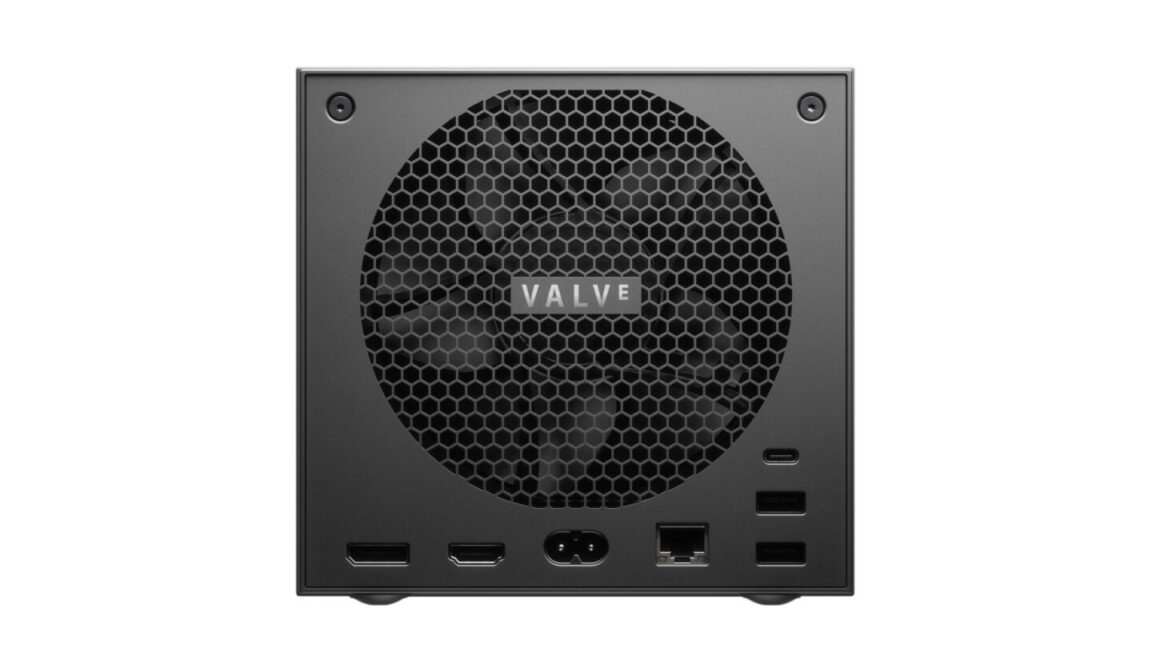
Why won’t Steam Machine support HDMI 2.1? Digging in on the display standard drama.
Ars Technica Science

Why won’t Steam Machine support HDMI 2.1? Digging in on the display standard drama.

Valve tells Ars its “trying to unblock” limits caused by open source driver issues. When

Valve announced its upcoming Steam Machine hardware last month, some eagle-eyed gamers may have been surprised to see that the official spec sheet lists support for HDMI 2.0 output, rather than the updated, higher-bandwidth HDMI 2.1 standard introduced in 2017. Now,

Valve tells Ars that, while the hardware itself actually supports HDMI 2.1, the company is struggling to offer full support for that standard due to Linux drivers that are “still a work-in-progress on the software side.” As we no

ted last year, the HDMI Forum (which manages the official specifications for HDMI standards) has officially blocked any open source implementation of HDMI 2.1. That mea

ns the open source AMD drivers used by SteamOS can’t fully implement certain features that are specific to the updated output standard. “At this t

ime an open source HDMI 2.1 implementation is not possible without running afoul of the HDMI Forum requirements,” AMD engineer Alex Deucher said at the time. This situation

has caused significant headaches for Valve, which tells Ars it has had to validate the Steam Machine’s HDMI 2.1 hardware via Windows during testing. And when it come

s to HDMI performance via SteamOS, a Valve representative tells Ars that “we’ve been working on trying to unblock things there.” That includes unblocki

ng HDMI 2.0’s resolution and frame-rate limits, which max out at 60 Hz for a 4K output, according to the official standard. Valve tells Ars it has b

een able to increase that limit to the “4K @ 120Hz” listed on the Steam Machine spec sheet, though, thanks to a technique called chroma sub-sampling. At its base, this workaround

ChatGPT hyped up violent stalker who believed he was “God’s assassin,” DOJ says
Ars Technica Science

ChatGPT hyped up violent stalker who believed he was “God’s assassin,” DOJ says

Podcaster faces up to 70 years and a $3.5 million fine for ChatGPT-linked stalking.

ChatGPT allegedly validated the worst impulses of a wannabe influencer accused of stalking more than 10 women at boutique gyms, where the chatbot supposedly claimed he’d meet the “wife type.” In a p

ress release on Tuesday, the Department of Justice confirmed that 31-year-old Brett Michael Dadig currently remains in custody after being charged with cyberstalking, interstate stalking, and making interstate threats. He now

faces a maximum sentence of up to 70 years in prison that could be coupled with “a fine of up to $3.5 million,” the DOJ said. The podcas

ter—who primarily posted about “his desire to find a wife and his interactions with women”—allegedly harassed and sometimes even doxxed his victims through his videos on platforms including Instagram, Spotify, and TikTok. Over time, his vid

eos and podcasts documented his intense desire to start a family, which was frustrated by his “anger towards women,” whom he claimed were “all the same from fucking 18 to fucking 40 to fucking 90” and “trash.” 404 Media surfaced the case, n

oting that OpenAI’s scramble to tweak ChatGPT to be less sycophantic came before Dadig’s alleged attacks—suggesting the updates weren’t enough to prevent the harmful validation. On his podcasts, Dadig described ChatG

PT as his “best friend” and “therapist,” the indictment said. He claimed the chatbot encouraged him to post

about the women he’s accused of harassing in order to generate haters to better monetize his content, as well as to catch the attention of his “future wife.” “People are literally organizing around your name, g

ood or bad, which is the definition of relevance,” ChatGPT’s output said. Playing to Dadig’s Christian faith, ChatGPT’s outputs also

OnePlus 15 finally gets FCC clearance after government shutdown delay—preorders live
Ars Technica Science

OnePlus 15 finally gets FCC clearance after government shutdown delay—preorders live

The device starts at $900 and comes with a free gift for a limited time.

OnePlus is ready to sell its new flagship smartphone in the US weeks after it made the device official.

Having now finally gotten Federal Communications Commission clearance, the OnePlus 15 is available for preorder.

It’s currently only live on the OnePlus storefront, but the device will eventually come to Amazon and Best Buy as well. Th

e OnePlus 15 launched in China earlier this year, and it was supposed to go on sale in the US a month ago. Ho

wever, the longest US government shutdown on record got in the way. Mo

st of the FCC’s functions were suspended during the weekslong funding lapse, which prevented the agency from certifying new wireless products. With

out that approval, OnePlus could not begin selling the phone. Thus

, it had no firm release date when the phone was officially unveiled for the US in early November. Inte

rested parties can head to the OnePlus website to place an order. The

In 1995, a Netscape employee wrote a hack in 10 days that now runs the Internet
Ars Technica Science

In 1995, a Netscape employee wrote a hack in 10 days that now runs the Internet

Thirty years later, JavaScript is the glue that holds the interactive web together, warts and all.

Thirty years ago today, Netscape Communications and Sun Microsystems issued a joint press release announcing JavaScript, an object scripting language designed for creating interactive web applications.

The language emerged from a frantic 10-day sprint at pioneering browser company Netscape, where engineer Brendan Eich hacked together a working internal prototype during May 1995.

While the JavaScript language didn’t ship publicly until that September and didn’t reach a 1.0 release until March 1996, the descendants of Eich’s initial 10-day hack now run on approximately 98.9 percent of all websites with client-side code, making JavaScript the dominant programming language of the web. It’s w

ildly popular; beyond the browser, JavaScript powers server backends, mobile apps, desktop software, and even some embedded systems. Accordin

g to several surveys, JavaScript consistently ranks among the most widely used programming languages in the world. In craft

ing JavaScript, Netscape wanted a scripting language that could make webpages interactive, something lightweight that would appeal to web designers and non-professional programmers. Eich dre

w from several influences: The syntax looked like a trendy new programming language called Java to satisfy Netscape management, but its guts borrowed concepts from Scheme, a language Eich admired, and Self, which contributed JavaScript’s prototype-based object model. The JavaSc

ript partnership secured endorsements from 28 major tech companies, but amusingly, the December 1995 announcement now reads like a tech industry epitaph. The endors

ing companies included Digital Equipment Corporation (absorbed by Compaq, then HP), Silicon Graphics (bankrupt), and Netscape itself (bought by AOL, dismantled). Sun Micros

Welcome to “necroprinting”—3D printer nozzle made from mosquito’s proboscis
Ars Technica Science

Welcome to “necroprinting”—3D printer nozzle made from mosquito’s proboscis

They’re quite a bit cheaper than manufactured nozzles if you can dissect them. Ne

crobotics is a field of engineering that builds robots out of a mix of synthetic materials and animal body parts. It

has produced micro-grippers with pneumatically operated legs taken from dead spiders and walking robots based on deceased cockroaches. “T

hese necrobotics papers inspired us to build something different,” said Changhong Cao, a mechanical engineering professor at the McGill University in Montreal, Canada. Cao’s

team didn’t go for a robot—instead, it adapted a female mosquito proboscis to work as a nozzle in a super-precise 3D printer. And it worke

d surprisingly well. To find the

right nozzle for their 3D necroprinting system, Cao’s team began with a broad survey of natural micro-dispensing tips. The researcher

s examined stingers of bees, wasps, and scorpions; the fangs of venomous snakes; and the claws of centipedes. All of those e

volved to deliver a fluid to the target, which is roughly what a 3D printer’s nozzle does. But they all had

issues. “Some were too c